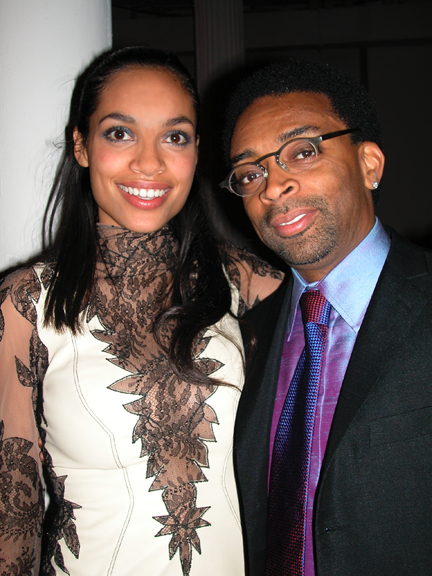
David Brent's favorite actor, Sydney Poitier.
Jeff GP, NEW YORK CITY
April 4, 2007 - 35mm/AMC Empire 25
The second helping of the Grindhouse double-feature, Death Proof, successfully elevates itself above mere tribute or homage to become its very own motion picture. This is no accomplishment. This is a given. The immensely talented writer/director Quentin Tarantino deserves no accolades for making a stand-alone movie. He should receive praise for making a thrilling, exuberant, visually stunning and often elegantly paced movie.
Sydney Poitier (not to be confused with her father, Sidney) and Vanessa Ferlito play “Jungle” Julia and Arlene “Butterfly,” respectively. Faced with the difficult task of leading us through quite a hefty opening chunk of Death Proof, Julia and Butterfly mindlessly gab away about their latest sexual conquests, scheming toward further success in the evening ahead. They’re not alone, there are other girls interjecting “Oh no, you didn’t!” and so on and so forth. The oddly gripping non-stop gabathon relocates to a local Austin bar and continues on and on, blending beautifully with intermittent dancing to the jukebox from the gals and their camera-ogled, glistening, sweat-damp legs.
Our main attraction, Kurt Russell’s scar-faced “Stuntman Mike” sits at the bar, overhearing the young ladies’ ruckus, smoothly chatting up Rose McGowan’s faux-blonde. A barrage of characters are thrown out there very quickly, and due to Tarantino’s exceptional patience and tension building, the real flesh and bones of movie making, the first half hour or so play like gangbusters. He has a bag of surprises in store, delivering cut after cut of wonderful heartfelt buoyancy, as he did in his previous Kill Bill movies. Unlike Kill Bill, when Death Proof enters its second phase, this changes.
Kurt Russell hijacks the lives of those young gals with his “death proof” stuntcar in a deliriously quick rampage of nighttime vehicular homicide. Throughout this entire first section of fabulous stuff, there are little jabs in the winking eye. Quentin Tarantino’s presence as the bartender in the Austin dive is harmless and funny enough, though in this first half we get a mere taste of what is to come as far as literal, spoken movie references go. A few verbal quips quoting Pulp Fiction and Kill Bill go down, sucking us momentarily out of an otherwise gripping dialogue scene. As a result of Russell’s rampage, two Austin police officers are introduced, and I’ll be damned if Tarantino does not tap into a bit of Kevin Smith buffoonery in reintroducing Michael Parks and his son to regurgitate some chatter from Kill Bill. Mr. Parks and “Son Number One” are quick on their way to becoming the Jay and Silent Bob of Tarantino’s universe, a universe he so frustratingly shares with Robert Rodriguez.
Introducing Zoe Bell. Zoe Bell is a brave, spunky top tier stuntwoman. She doubled for Uma Thurman in the more impressively physical parts of Kill Bill, and now, in Death Proof, she doubles for herself, playing herself. She is thrown into the pot with another group of gals on hiatus from shooting a movie. They all work in the movie industry, so Tarantino lets the movie chatter fly like buckshot. From Lindsay Lohan to Vanishing Point, these gals let it all out. Unlike with the first troupe, the dialogue is in aid of name dropping, not personality building and character molding. Fantastic actress extraordinaire Rosario Dawson is part of this club, and when she has the floor the movie shines, but somehow the movie keeps coming back to Ms. Bell.
Zoe Bell is a pathetic actress. Weak actors have not prevented Quentin Tarantino from siphoning great performances in the past; just look at how great Michael Madsen is in Reservoir Dogs and Kill Bill. Watching Zoe Bell deliver pages and pages of dialogue is unpleasant. During one exceptionally long discussion in a diner, Tarantino opts not to cut away as the camera floats in and out and around, solving the issue of a circular conversation without cutting. Zoe Bell’s line delivery overwhelms what could be astounding. She tops herself again with another long dialogue scene, this one without the moving camera, so her every move can be properly monitored. While being spoken to, her mind is seen working to deliver her next line with the confidence of the ham of your elementary school production of Alice in Wonderland. She is a bad, bad, bad actress.
Luckily, back comes the super-animated Kurt Russell, and this time in glorious daylight. The resulting car chase is mesmerizing, with stuntwoman Zoe Bell doing what she does best, riding on the hood of a car during a chase. It is a fantastic sequence, though it’s got nothing on the Belmondo/Sharif car battle in The Burglars, nor on any number of the chases in The Bourne Supremacy, but don’t get me wrong, it’s great. Russell brings the movie back to its senses, as he gnashes his teeth and bites into his role as a man who gets his kicks from car crashes. By kicks, I am referring to the variety of kicks had in the movie Crash.
Quentin Tarantino’s movie is wonderful, though difficult to watch when it falters, not unlike the grindhouse movies it refers to. Rather than craft an homage, he crafts a real movie, a slicker, improved variety of grindhouse picture that looks great and sounds great. He opts against the immense digital scratching up of his film print, and instead giving it a properly weathered, true to projection standards feel, with jumped frames now and again. Death Proof, like his other movies, is a profession of love, and this love cannot be articulated verbally, no matter how hard he or his characters try. When it comes to getting down to brass tacks and putting images with his exceptional non-movie related dialogue, there are few better. Don’t forget that, no matter how much stupid shit the guy says.
The second helping of the Grindhouse double-feature, Death Proof, successfully elevates itself above mere tribute or homage to become its very own motion picture. This is no accomplishment. This is a given. The immensely talented writer/director Quentin Tarantino deserves no accolades for making a stand-alone movie. He should receive praise for making a thrilling, exuberant, visually stunning and often elegantly paced movie.
Sydney Poitier (not to be confused with her father, Sidney) and Vanessa Ferlito play “Jungle” Julia and Arlene “Butterfly,” respectively. Faced with the difficult task of leading us through quite a hefty opening chunk of Death Proof, Julia and Butterfly mindlessly gab away about their latest sexual conquests, scheming toward further success in the evening ahead. They’re not alone, there are other girls interjecting “Oh no, you didn’t!” and so on and so forth. The oddly gripping non-stop gabathon relocates to a local Austin bar and continues on and on, blending beautifully with intermittent dancing to the jukebox from the gals and their camera-ogled, glistening, sweat-damp legs.
Our main attraction, Kurt Russell’s scar-faced “Stuntman Mike” sits at the bar, overhearing the young ladies’ ruckus, smoothly chatting up Rose McGowan’s faux-blonde. A barrage of characters are thrown out there very quickly, and due to Tarantino’s exceptional patience and tension building, the real flesh and bones of movie making, the first half hour or so play like gangbusters. He has a bag of surprises in store, delivering cut after cut of wonderful heartfelt buoyancy, as he did in his previous Kill Bill movies. Unlike Kill Bill, when Death Proof enters its second phase, this changes.
Kurt Russell hijacks the lives of those young gals with his “death proof” stuntcar in a deliriously quick rampage of nighttime vehicular homicide. Throughout this entire first section of fabulous stuff, there are little jabs in the winking eye. Quentin Tarantino’s presence as the bartender in the Austin dive is harmless and funny enough, though in this first half we get a mere taste of what is to come as far as literal, spoken movie references go. A few verbal quips quoting Pulp Fiction and Kill Bill go down, sucking us momentarily out of an otherwise gripping dialogue scene. As a result of Russell’s rampage, two Austin police officers are introduced, and I’ll be damned if Tarantino does not tap into a bit of Kevin Smith buffoonery in reintroducing Michael Parks and his son to regurgitate some chatter from Kill Bill. Mr. Parks and “Son Number One” are quick on their way to becoming the Jay and Silent Bob of Tarantino’s universe, a universe he so frustratingly shares with Robert Rodriguez.
Introducing Zoe Bell. Zoe Bell is a brave, spunky top tier stuntwoman. She doubled for Uma Thurman in the more impressively physical parts of Kill Bill, and now, in Death Proof, she doubles for herself, playing herself. She is thrown into the pot with another group of gals on hiatus from shooting a movie. They all work in the movie industry, so Tarantino lets the movie chatter fly like buckshot. From Lindsay Lohan to Vanishing Point, these gals let it all out. Unlike with the first troupe, the dialogue is in aid of name dropping, not personality building and character molding. Fantastic actress extraordinaire Rosario Dawson is part of this club, and when she has the floor the movie shines, but somehow the movie keeps coming back to Ms. Bell.
Zoe Bell is a pathetic actress. Weak actors have not prevented Quentin Tarantino from siphoning great performances in the past; just look at how great Michael Madsen is in Reservoir Dogs and Kill Bill. Watching Zoe Bell deliver pages and pages of dialogue is unpleasant. During one exceptionally long discussion in a diner, Tarantino opts not to cut away as the camera floats in and out and around, solving the issue of a circular conversation without cutting. Zoe Bell’s line delivery overwhelms what could be astounding. She tops herself again with another long dialogue scene, this one without the moving camera, so her every move can be properly monitored. While being spoken to, her mind is seen working to deliver her next line with the confidence of the ham of your elementary school production of Alice in Wonderland. She is a bad, bad, bad actress.
Luckily, back comes the super-animated Kurt Russell, and this time in glorious daylight. The resulting car chase is mesmerizing, with stuntwoman Zoe Bell doing what she does best, riding on the hood of a car during a chase. It is a fantastic sequence, though it’s got nothing on the Belmondo/Sharif car battle in The Burglars, nor on any number of the chases in The Bourne Supremacy, but don’t get me wrong, it’s great. Russell brings the movie back to its senses, as he gnashes his teeth and bites into his role as a man who gets his kicks from car crashes. By kicks, I am referring to the variety of kicks had in the movie Crash.
Quentin Tarantino’s movie is wonderful, though difficult to watch when it falters, not unlike the grindhouse movies it refers to. Rather than craft an homage, he crafts a real movie, a slicker, improved variety of grindhouse picture that looks great and sounds great. He opts against the immense digital scratching up of his film print, and instead giving it a properly weathered, true to projection standards feel, with jumped frames now and again. Death Proof, like his other movies, is a profession of love, and this love cannot be articulated verbally, no matter how hard he or his characters try. When it comes to getting down to brass tacks and putting images with his exceptional non-movie related dialogue, there are few better. Don’t forget that, no matter how much stupid shit the guy says.
powered by ODEO