Tuesday, April 3, 2007

Pulse

dir. Jim Sonzero

It sure was nice of Sir Ben Kingsley to get all made up for this one.

Guest Article!
Joey Devine, ALAMEDA
April 3, 2007 - DVD

I hate Gore Verbinski. That fucker and his boring ass ring movie have ruined the teen horror genre. Lately, I’ve found myself perusing the new release wall pining for the days of Final Destination, I Know What You Did Last Summer and all of those really mediocre middle to late ‘90s Scream rip offs. Instead all we get are fucking innocent blonde ladies being terrorized by fucking children and houses; and in this movie, internet savvy ghosts. That’s right, in this one Death goes High Tech! Pulse stars a who’s who of young Hollywood: Veronica Mars, That Guy With the Weird Hair from Old School, the Jewish guy from Freaks and Geeks, some dude from Lost (speaking of which, who the fuck watches THAT show?), and Christina Milian who I think I heard mentioned on TRL one time when I was drunk. So yeah, that’s the cast. Excellent, excellent cast. I’ll let the hysterical old lady from the middle of the movie explain the plot:

“They came through the computer! We heard it’s safe in the dead zones! Anywhere there’s no computers, no phones, no Wi-Fi! Anywhere they can’t come through!”

Thanks for summing that up for me, screenwriter. This movie somehow manages to be a boring Japanese horror remake mixed with crappy 28 Days Later empty streets paranoia. All leading up to a hilariously stupid race against cell phone signal bars. Read that last sentence again, because it’s not a typographical error.

THE THRILLING FINALE OF PULSE IS A RACE AGAINST CELL PHONE SIGNALS!

Who wouldn’t want to see that? In fact I take back everything thing I’ve said, Pulse is great! Ms. Mars is a cute as a button leading lady. The choice of never properly lighting the scenes is genius. Freaks and Geeks guy is Rob Schneider in Judge Dredd-esque as the comic relief. And this movie is literally pulse pounding! (har har har)

If you want to find yourself asking questions like...

“Why doesn’t anyone turn any lights on?”
“Is Ted Raimi in Grudge or Grudge 2? "
"Did I even see Grudge 2?

“Man, are the Japanese versions just as crappy?”
“What’s worse, this or The Skeleton Key?”
"Didn't I sleep through most of The Skeleton Key?"
and most importantly, “What hath Gore wrought?”

...then by all means, see Pulse. It’s totally boring and stupid.

~Joey “Sure, I’ll contribute to your website, but only if I get to write about mediocre and crappy movies no one cares about” Devine

Sunday, April 1, 2007

Seconds

dir. John Frankenheimer

Who needs 3D when you got James Wong Howe?

Kalen Egan, LOS ANGELES
March 31, 2007 - DVD

In addition to being an amazing movie, Seconds has one of the great titles in film history. It implies a certain greed, or a general dissatisfaction with what you’ve been given. Even when the “second helping” is insisted upon instead of requested, it’s in the act of taking that a person’s self-interested nature reveals itself. At the same time, this movie is savvy enough to sympathize with the taker, and it aims to investigate the larger problem, which is a society that knows an individual will take everything they’re offered, and irresponsibly keeps… on… offering. When a pet goldfish eats itself to death, who’s to blame?

Whoa. But I’m getting carried away. First, the set-up. The story is one of those things that begi
n with a successful man, perhaps in his mid-fifties, who lives his life as a ghost. He and his wife sleep in separate beds, it’s awkward when they kiss, and he finds nothing very worthwhile about his comfortable existence. One day he receives a phone call from a friend he thought was dead, and he’s given vague instructions that will lead him to an opportunity to live an altogether new life, as a new man, complete with a new face, new personality, new interests, and even “a new signature!” For more, check out the trailer.

This Twilight Zone-y premise is just the beginning, though, and Frankenheimer steers t
he story through some of the most harrowingly photographed psychological set pieces I’ve ever seen (special fun note: big fans of Requiem for a Dream might be surprised when they see shots that predate Aronofsky’s cheeseball “camera-attached-to-the-character” business by almost 35 years, and do it with infinitely more success, purpose and panache). Cinematographer James Wong Howe attacks this stuff like a man unfettered, often jamming his lens so close to the features of the actors that the camera shadow jags across their face. More than once, physical instinct had me leaning backwards, thinking Rock Hudson’s forehead might smash through the screen. It’s like a latter-day Orson Welles picture (or maybe one of Larry Cohen’s cracked bits of pulp genius) in its seemingly limitless supply of funhouse angles, some of them magnificently sloppy, and all of them supplementing the movie’s surreal, manic atmosphere.

Seconds was apparently met with a lot of confusion and derision upon release, and even now is generally seen as a fairly minor, “flawed” cult film. This is insane, of course, because the movie’s an awesome success, but I think I have a theory as to why the uncertainty remains. Like The Beguiled, this film uses our knowledge about other movies and about ourselves to assume that we’ll take certain notions as a given. Take the dissatisfied middle-aged man element, for example; Seconds makes no real effort to probe the main character’s psyche and find out what, specifically, is wrong with him. Instead, we’re talking about a general, familiar malaise, and it’s with this kind of vaguery that the film asks the audience to fill in the character gaps by projecting their own minds and experiences upon him. This kind of thing makes viewers nervous—it’s getting a little too personal. Couple this with truly invasive cinematography, and suddenly Seconds is "psychologically shallow" and "overly stylized."

And let's talk once again about that style. There are two scenes in particular that come hand in hand, one after the other, which I believe earn Seconds most of this type of criticism. In actuality, these are probably the best scenes in the entire movie. The first is set at a weird kind of wine festival, and the second occurs at a cocktail party in the main character’s house. Both of them are long, essentially plotless pieces of pure movie mania; in the first, we watch a stodgy, proper man gradually lose all his inhibitions. It begins as a fairly innocuous-seeming, renaissance-style grape stomping party. Quickly, though, it evolves into a full-blown, drunken, naked free-f0r-all (I mean, full-frontal... and this is 1966!), and by the time Rock Hudson is grinning like a mental patient and screaming "YES!! YESSS!!" we totally feel the release. Interpret that as you will. In the second sequence, we watch this same man crumble under the weight of his new (and, at its core, false) personality. We watch a man drown himself in alcohol, stumble around embarrassing all his guests, and eventually hit rock bottom (ho, ho) as he realizes that no matter what he does he's the same lost and dissatisfied man as he was in his old life. Calling this second sequence "uncomfortable" would be an understatement... it's brash and ugly and insane. And it gets us exactly where we need to be, down and out and massively depressed. Because of the elation we felt in the earlier sequence, this actually kind of feels like a personal failure. It tears at us as viewers, not just at the Hudson character, and it's this kind of invasiveness that, I think, freaks the shit out of some people. It's a more advanced level of filmic interaction, but if you can deal with it and acknowledge that it's achievement is pure and direct, and that the uncomfortable feeling is just the film working its magic, then this movie may be among the most powerful you'll see.

And in the end, it all comes down to greed. This is a film about a man destroyed by accepting an offer for "seconds," and thinking that the answers to his problems lay in a different assortment of company and products. I've read some reviews (and, indeed, Frankenheimer himself has agreed with this assessment) that at it's center this is a "be careful what you wish for" sort of film. I completely fuckin' disagree, even despite the director's interpretation of his own work. This is a man who only "wishes" for something after he's told it will fix all his problems. When it doesn't, as it certainly never would, he gets blamed for the failure, and the punishment he receives is nothing short of permanent and ever-repeating. What a crushing, fantastic movie.

Thursday, March 29, 2007

Hot Fuzz

dir. Edgar Wright

A rare appearence of Haagen Dazs in a movie that, like this reviewer, prefers Ben and Jerry's.

Jeff GP, NEW YORK CITY
March 5, 2007 - 35mm/Broadway Screening Room

During the invasion of the nearly finished dreamhouse of Cuban drug kingpin Johnny Tapia (Jordi Molla), some hot-shot detectives and CIA super-soldiers happen upon the drug lord’s elderly mother, who in turn pulls a shotgun on them and starts unloading. It is one of the most annoying and unfunny moments in the string of overblown meanness that is Bad Boys 2. That is not to say the Bad Boys saga is not peppered with moments of overblown creativity and humor. The simple state of absolute excess in all areas is bound to yield a degree of brilliance, and in Bad Boys 2’s case, it does. Alas, this minimal, but fierce brilliance is beaten to a pulp by filthy, filthy, aggressive garbage (such as the camp of an old lady firing a shotgun).

With a firm grasp of its wits, a full heart and open arms, Hot Fuzz embraces Bad Boys 2 and the likes of many, many other movies like and unlike it, primarily those concerning police officers. In embracing these pictures, like with the team’s previous movie, Shaun of the Dead, Hot Fuzz takes a Bob Beamon leap from the spoofier side of the tracks and creates a movie that simply, eloquently becomes a member of the genre it initially appears to be spoofing. It is the stuff of reverent homage, made with the virile aggression of Bad Boys 2, but displaced to the English countryside with scenes of dialogue that are directed rather than presented as an annoying necessity separating car chases.

Again (and again and again), like Bad Boys 2 and Shaun of the Dead, Hot Fuzz is a buddy comedy featuring a straight-laced man of action (Simon Pegg) and his doofy doting sidekick (Nick Frost). The buddy cops patrol the rural, isolationist town of Sandford, where the community’s primary concerns are hooded youths and a “human statue” street performer. Needless to say, things are not what they seem and violence ensues, but it is these early character-driven and positively meditative by action movie standards scenes that allow for the success of the chaos to come. Jokes are tossed back and forth between the two buddies and an alarmingly prestigious supporting cast featuring the likes of Jim Broadbent and a mustachioed Paddy Considine. These scenes and jokes (catching an escaped swan, eating ice cream as punishment and so on) are only mildly amusing, but due to their modest existence, when this movie takes off and fully explores its action roots the image of an elderly woman firing off a shotgun actually becomes funny! The smalltime, composed jokiness of previous scenes juxtaposed with full-throttle old lady artillery equals funny!

While these “smalltime” scenes are moments of quiet, the transitions between them are anything but. In Shaun of the Dead, director Edgar Wright utilized a series of three or so quick cuts as transitions from scene-to-scene. Used again in Hot Fuzz, these quick cut, loud-as-all-hell bits drag on and on in the queasy, mean-spirited style of every single scene in Bad Boys 2. The bits eventually develop into the stock “lock and load” gun montage, which, again, is funny though extremely loud and lacking the cocksure bravado Edgar Wright displays when the triggers of those guns are being pulled.

Cars explode, our heroes fire every variety of gun known to humankind and most importantly, bodies start flyin’ and start droppin’. The deft balancing act between the complicated, creative action and inventive and referential comedic one-liners tips Hot Fuzz to the rim of greatness. The movie takes a giant leap forward anytime its characters grow tight-lipped and straight-faced. In other words, the picture gets a whole lot funnier when the characters get serious and curb the chucklesville joke-time.

As the picture wraps up it returns to chucklesville, population: cameo. As brilliant as the likes of Steve Coogan and Bill Nighy are, the movie belongs to Simon Pegg and Nick Frost. They outshine even the otherworldly talents of Jim Broadbent and Paddy Considine, and because of their spark and Edgar Wright’s extraodinary chops as an action director, Hot Fuzz excels. Comparisons will unavoidably be drawn to Shaun of the Dead, as Hot Fuzz is quite close to stylistically being the same movie. They’re both welcome, ambitious additions to their respective genres, and if you like one you’re likely to enjoy the other, but more importantly if you like Bad Boys 2 at all (and damn you if you do!), Hot Fuzz’ll be worthy of more than a hearty Mike Lowrey/Will Smith “WOOOOO!

Monday, March 26, 2007

Black Book

Black Book
dir. Paul Verhoeven

Carice, starlet (not to be confused with Clarice Starling)

Jeff GP, NEW YORK CITY
February 27, 2007 - 35mm/Walter Reade Theater

The sexiest holocaust movie ever made, Black Book tackles the European World War II narrative through the lens of a different variety of heroism from your typical liberation saga. It has its share of benchmark or stock moments of World War II cinema, such as the young soldier struggling with his first “murder,” but thankfully moments like this are presented without the annoying “oh so tragic, oh so important” air that detracts from such scenes in the Flags of Our Fathers and Saving Private Ryans of the world. There is no droning music, washed-out old-timey muted color palette or even a moment to reflect. Most of all there is little to no catharsis or self-congratulatory back-slapping. Instead, you get layer upon layer of enjoyable thrills blending in successfully with horrifying scenes of inhumanity garnering heroically human reactions.

Carice Van Houten stars as Rachel Stein, a Dutch Jewish girl who, upon the execution of her family, joins an underground resistance against the Nazi occupation. There in lies one of the many fascinating grey areas this movie addresses. Is our heroine fighting for revenge or some political cause, and more importantly, does any of that even matter as long as she’s fighting/fucking? Fucking? In order to infiltrate a German base and liberate a fellow resistance fighter, Rachel Stein becomes Ellis de Vries and seduces the handsome Ludwig Muntze, head of the Nazi Intelligence (the Sicherheitsdienst or “SD”). In the typical and always refreshing style of director/co-writer Paul Verhoeven, our heroine is presented in a way that breaks down the term “sex-symbol” giving us a character of immense sexiness borne not only from statuesque beauty, but of human, earthy strength and frailty. A great deal has already been written about the transitional Rachel to Ellis scene where she dyes her hair blonde, including (gasp!) her pubic hair. Paul Verhoeven, never one to shirk the details, presents this scene with a frank matter-of-factness that only enhances the sexiness of his lead. Mr. Verhoeven’s inclusion of not just that scene, but scenes such as one where Ellis and another Nazi mistress swap dialogue over peeing lends profundity and a sense of human realism that lacks from not just World War II movies but historical movies of all kinds.

The sexual and physical realism brought to the table by Mr. Verhoeven and his brave actors gives the "War thriller" narrative a sense of urgency as the plot careens forward through double-crosses and side-swapping. At times it seems the Nazis may as well be gangsters who have taken a hostage and a sexy police officer goes undercover to get to the bottom of it (see The Departed). Yet, the stakes are greater, and more often than gangsters the Nazis appear to be the American military complex colonizing nations with a presence of boastful cocksure instability.

For the Verhoeven aficionados and obsessives out there (I know I’m not alone! Top five living directors!) the authorial trademarks are ever present. His attitude toward WWII and war in general has wavered little since Soldier of Orange, though his rollercoaster ride through Hollywood has made him a slicker narrative beast, with Black Book his most cohesive (only in the narrative sense) picture since Basic Instinct. His anger toward his native Holland’s role in The War is reiterated, and Black Book is an excellent companion to Soldier of Orange, maybe its big sister (Katie Tippel would be its cousin). While Black Book will be toted as Paul Verhoeven’s “return to form,” he did not go anywhere. He made one, and only one, self-described bad movie in Hollow Man after a string of consistently brilliant efforts. Black Book is another great one, consistently brilliant throughout, thrilling, sexy, bold, smart, brash… all of that good shit, but mostly, most of all, human, and human in the face of the craziest big picture moviemaking around.

Thursday, March 22, 2007

300

300: the IMAX Experience
Dir. Zach Snyder

Balls.

Jeff Larson, NEW YORK CITY
March 22, 2007 - IMAX/Loews Lincoln Square

Aw, hell. It's:
and (Ann Coulter at her worst),

and,

(I apologize to you all for the shallow nature of this post. 300 is the kind of pap -- sometimes called "art" -- that sucks the lifeblood of culture and leaves a burnt shell containing only scores of massacred brain cells. It's by far the worst movie I've ever seen. America needs to wake up now, and 300 is putting us all back to sleep.)

(Click on the comments below. As always, Jeff GP has a far more erudite and accurate portrayal of 300 than I could ever hope to write.)

Wednesday, March 21, 2007

Ennio Morricone Festival, pt. 3

dir. Giulio Petroni

J.P. Law heads out for a cold dish.

Jeff GP, NEW YORK CITY
February 13, 2007 - 35mm/Film Forum

On the off chance you or anyone you know decides to massacre a family in the Western part of the United States of America in the 19th century, make sure they kill ‘em all. Death Rides a Horse takes the familiar trope of a young child, witness to his family’s death, growing up to wreak havoc and take revenge, bloodying the landscape along the way (see Once Upon a Time in the West). Unlike Charles Bronson in Once Upon a Time in the West, John Philip Law does not take his time in becoming the baddest most feared of all gunmen. His pride won’t let him admit that, but he reluctantly takes the aid of an old outlaw, played by Lee Van Cleef, who happens to be hunting the same gang of rapin’ murders.

Young, handsome John Philip Law will have nothing to do with compromise or bribery and will stop at nothing for his revenge. His fury has warped his perspective of his familial tragedy. The images have been playing in his mind for 15 years to boiling point. Anytime one of the gang members are in sight, passion takes over in the form of a red-hued replay of that specific gang member’s part in the massacre over Law’s steaming eyes. Ennio Morricone provides a thumping, rhythmic, primal score to these moments that is the stuff of dreams and has since become the stuff of legend. I’ve done well to not specifically reference how his scores have been used in Quentin Tarantino’s Kill Bill, though in this case, Mr. Tarantino borrowed not just the music cue, but the fury of revenge close-up/red-hued flashback, and to great effect. In a picture more subdued, such as Death Rides a Horse, the insanity of a gut-curling score and stylized close-up pack an emotional wallop.

Lee Van Cleef delivers another brilliant and emotionally complex performance here, as the convict who is not all he appears to be. His swagger as he trots his horse around a buried-to-the-neck Law is both charming and mean with a balance of manner practically unique to his on-screen persona. While The Big Gundown is his swan song, the legendary “Bad” makes us love him yet again.


It would be an understatement to call this trailer "awesome." Watch it.

dir. Maximilian Schell

Wedding Crashers, starring Vince Vaughn and Owen Wilson

Jeff GP, NEW YORK CITY
February 14, 2007 - 35mm/Film Forum

This tired, unnecessarily moody thriller, featuring a barely existing, unnotable score by Ennio Morricone is the low point of narrative contrivance in an otherwise nearly perfect selection of challenging, complex and mostly unseen classics in the Ennio Morricone program. Director Maximilian Schell takes a little whodunit and throws so much disinformation at you that it becomes bogged down with nonsense.

Jon Voight plays a young go-getter detective taking and shunning advice from a dying old detective. They’re investigating the very mysterious death of yet another detective. The corpse of the murdered detective is played by Donald Sutherland, the lifeblood of so many fantastic ‘70s pictures. The case and point being the lack of pulse in End of the Game. Mr. Voight, who plays innocence wrapped in a rough exterior very well, is unaware of the very personal battle being waged between his old, doddering partner and the suspected murderer. The movie opens many years earlier as the two friends pick up a young lady.

“I could murder her right in front of your eyes and you couldn’t prove it.”

Both the tagline of the picture and the overarching thematic “haunt” of End of the Game lies in that line, spoken by the murderer to the detective (best friend to best friend, rival to rival). The movie would be better off as a tale of cruel obsession with pride, and if it were more focused on the dying old man, it would be a better picture. Instead, Jon Voight unnecessarily takes center stage and observes. Madness, friendship, themes of regret and frustration for a life lost and lives lost; these are all interesting things presented in the blandest possible package. Fog rests heavily over the countryside as the two detectives explore the crime scene, but the heaviest fog distorts what could, in fact, be great if it were less Love Me If You Dare and more The Conversation.


This is part of the ongoing Morricone Festival coverage.

Sunday, March 18, 2007

The Witches

dir. Mauro Bolognini/Vittorio De Sica/Pier Paolo Pasolini/Franco Rossi/Luchino Visconti

Dancing around a boiling cauldron?


Jeff GP, NEW YORK CITY
February 12, 2007 - 35mm/Film Forum

The Witches is one of a thankfully short string of highly unsuccessful short film collections released as one motion picture. The most famous relatively recent American forays into this medium have been Four Rooms and New York Stories. Like those two pictures, The Witches, is a mixed bag, so mixed in fact, that only one of the pictures displays any ambition and success. Unsurprisingly this short comes from Luchino Visconti, director of the legendary Burt Lancaster epic, The Leopard. This is not the first time Mr. Visconti partook in such a short film exercise. Prior to The Leopard, he directed a segment of Boccaccio ’70, a collaborative short program between himself, Federico Fellini, Mario Monicelli and Vittorio De Sica, who also contributed a short to The Witches.

The thread linking all of the shorts in The Witches' program is the lead actress, Silvana Mangano. It is a celebration of Ms. Mangano’s dexterity as an actress. The five drastically different characters she plays may simply be described as the titular “witches” though only a few demonstrate literal supernatural abilities (none have warts or wear pointed hats). The least supernatural is also the least comedic and most superlative of the shorts, which can all be described classically as “comedy.”

The first short,
The Witch Burned Alive, from the aforementioned Mr. Visconti follows Ms. Mangano appropriately playing a beautiful, famous actress worn down by her popularity and the constant fawning of male suitors. She retreats to an old friend’s snowbound resort to escape some of these pressures for reasons initially unclear. Her discomfort is clear from her introduction. Outside the confines of her room she plays the prim and proper entertainer, regaling everyone with her sophisticated beauty; tugging men’s heartstrings this way and that as she is naturally inclined to do. Yet, in private she is on the brink of an emotional breakdown. Her life is in tailspin and nobody can tell. She is pregnant. Pregnancy, in her universe is the end of a career and the start of a many, many things that accompany pregnancy, and her crisis is levied with an appropriate weight and subtle humor. Of course, the “woe is me” attitude of a wealthy beauty cannot help but be funny, though Visconti’s “witch” has kept her pregnancy to herself, because she is tragically unsure of her own personality. All of these threads are very unspoken and play out as our “witch” traverses room to room, a flurry of unpointed emotion. It is wonderful, smart, and thankfully maybe the longest of the shorts.

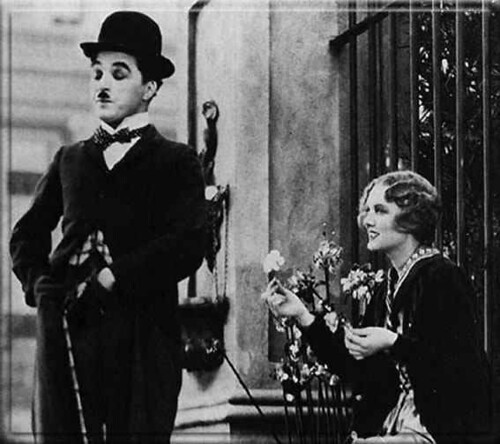
Pier Paolo Pasolini contributes a slapstick fable, The Earth Seen From the Moon, about a doofy father and son team searching for a new woman of the house, as their wife/mother has recently passed. Their misadventures play out as a silent comedy would, all bug-eyes and body jestures, complete with a whirling soundtrack. Ms. Mangano plays a mysterious, beautiful and loving deaf gal, adding a certain contextual flair to enhancing the extreme physicality of the comedy in a way that clearly refers to Charlie Chaplin’s masterpiece, City Lights (where The Tramp falls in love with a beautiful and loving blind gal). Pasolini’s general sense of humor is different from Chaplin's, often drawing from visceral recklessness, but in this case the tempered chaos he attempts, with a neon-bright color palette (never more prevalent than in the father and son’s orange hair), burrows into cartoony tedium. There remain a fine joke hither and thither, but the sheer volume of jokes and numerous misses resemble a live-action episode of The Family Guy.

Speaking of cartoons, the two least known directors in the program, Mauro Bolognini and Franco Rossi, contribute very brief, slightly amusing tales that could be told in a single panel comic plunked between a Henrik Hertzberg and Lauren Collins piece of The New Yorker’s “The Talk of the Town”. A young “witch” rescues an injured man from a car wreck and appears to speed him off in the direction of the hospital. As she passes a hospital it is revealed, she just wants an excuse to drive fast and meet her date in time! THE END!

Perhaps the only segment of The Witches Americans may be farmiliar with is Vittoria De Sica’s An Evening Like the Others co-starring Ms. Mangano and a boyish Clint Eastwood. Eastwood plays the silly, repressed American husband to a sexually dissatisfied Italian wife. He complains of being tired and calmly refuses nights out on the town. His wife bottles up her anger, releasing it in flights of daydream musical fantasy sequences. It is amusing to see Eastwood so unhinged in these fantasy sequences, with his prevalent, unencumbered sexuality on display, though the simple representations of the spouses in the non-fantasy sequences is the stuff of, well, short movies (pleasantly light, when not attempting to be uncomfortably heavy). Like in Pasolini’s short the joke gets old and drags into the horrifying predicament of the movie short that is just too long.

Someday, The Witches will be released in a digestible DVD format, where you can pleasantly spread the shorts out or just relish Visconti’s over and over again. But, for now, if you speak Italian, enjoy the slightly sped up version that youtube has to offer, complete with Ennio Morricone’s finest score of the picture.


This is part of the ongoing Morricone Festival coverage.